CINEMA
DECODED.
Stop watching passively. HardMatte extracts the mathematical signature of your favorite films—from color theory to cutting rhythms.
Live Index
0▲ 0% THIS WEEK
New Entries (7d)
System: Online// Database: Connected// Security: Active New Entry: The Usual Suspects// ASL: 4.2s
01Editorial Analysis
Deep Focus
Deep Focus Archive →
The Anatomy of a Feel-Good Movie (Is Joy Just Bright Colors?)
What does "happiness" look like in a dataset? Is it just pumping up the saturation slider? I took three "joy" classics—The Wizard of Oz, Forrest Gump, and La La Land—and broke them down to see if they share a chemical formula. The data suggests they don't. In fact, they are barely the same genre.
12/26/2025Read Analysis >
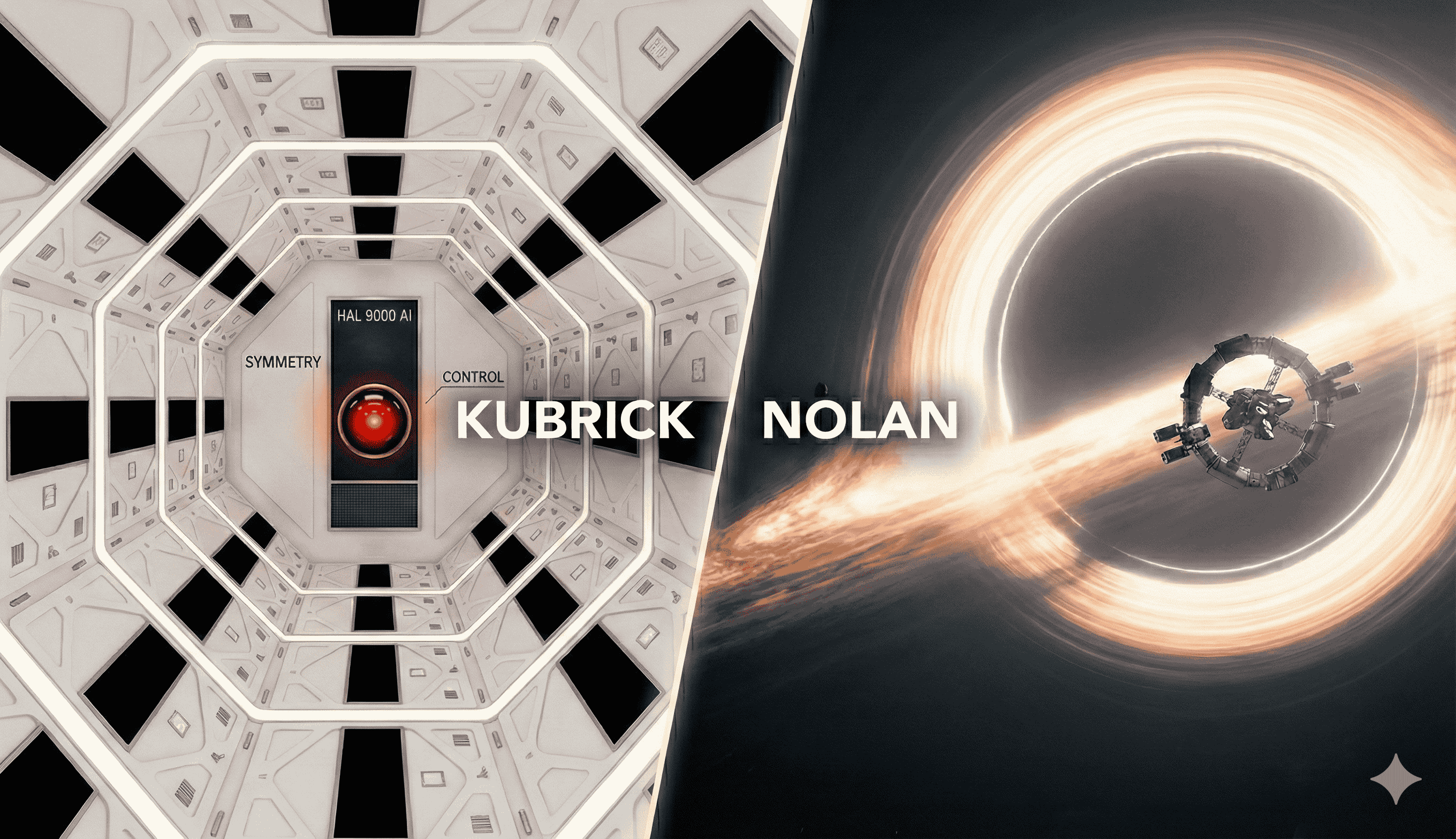
The Director Showdown: Kubrick vs. Nolan (What the Data Actually Says)
Everyone calls Christopher Nolan the heir to Stanley Kubrick’s throne. It’s an easy comparison: they both make "smart" blockbusters, they both obsess over technical precision, and they both leave audiences feeling cold and small in the face of massive concepts. But "feeling" similar isn't enough for me. I wanted to see the signal in the noise. I wrote a Python script to analyze their filmography frame-by-frame, pitting Kubrick (2001, The Shining, Full Metal Jacket) against Nolan (The Dark Knight, Interstellar, Inception). The data suggests that while they might arrive at the same destination, they are driving completely different vehicles.
12/24/2025Read Analysis >

The Myth of the "Dark" Superman: What the Data Actually Shows
We all have the same memory: Christopher Reeve was bright and colorful, and modern Superman is dark and grey. It’s the standard "gritty reboot" narrative. But memories are unreliable. So I ran the code. I analyzed the color and light data of the franchise over 47 years—from Reeve (1978) to the early footage of the upcoming 2025 reboot. The results didn't just disprove the theory; they inverted it.
12/24/2025Read Analysis >
02Recent Uploads
Latest Entries


03Membership
SYSTEM ARCHITECTURE.
Current system status and future roadmap. Join the pilot program to shape the evolution of HardMatte.
Pilot Access
Active/mo
- Full Database Access
- Visual Motion Tracking
- Community Reviews
- Unlimited Metric Search
Analyst Tier
LOCKEDTBA
- Advanced Compare Engine
- AI Recommendation Model
- Priority Indexing Requests
- Deep Heatmap Visualization